Meta Title: How to Build Muscle Without Gym | Complete Beginner Guide
Meta Description: Learn how to build muscle without gym using simple home workouts, proper nutrition, and smart recovery. A complete beginner-friendly guide.
How to Build Muscle Without Gym
Many people think you need an expensive gym membership and heavy machines to build muscle. The truth is completely different. If you know the right techniques, follow a proper workout routine, and eat the right foods, you can build a strong and muscular body without ever stepping inside a gym.
I personally believe consistency matters more than fancy equipment. Your body doesn’t know whether you’re lifting a dumbbell in a gym or doing push-ups at home. It only responds to resistance, nutrition, and recovery.
In this guide, I’ll explain how to build muscle without gym in the easiest way possible so even beginners can start today.
Can You Really Build Muscle Without a Gym?
Yes, absolutely.
Your muscles grow whenever you challenge them with resistance. Bodyweight exercises, resistance bands, backpacks filled with books, water bottles, and household items can all create enough resistance to stimulate muscle growth.
Thousands of athletes, military personnel, gymnasts, and calisthenics enthusiasts have built impressive physiques using bodyweight training.
The secret isn’t the location.
The secret is progressive overload.
How Muscles Actually Grow
Before learning how to build muscle without gym, it’s important to understand muscle growth.
Whenever you perform challenging exercises, tiny muscle fibers break down. During recovery, your body repairs those fibers and makes them slightly bigger and stronger.
This process is called muscle hypertrophy.
Three things are required:
- Resistance training
- Enough protein
- Proper rest
Miss one of these, and muscle growth slows down.
Best Bodyweight Exercises for Muscle Growth
The biggest advantage of home workouts is simplicity.
Here are the best exercises that target your entire body.
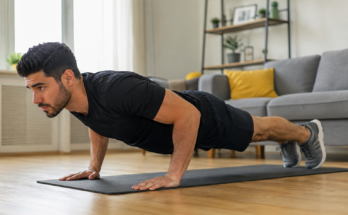
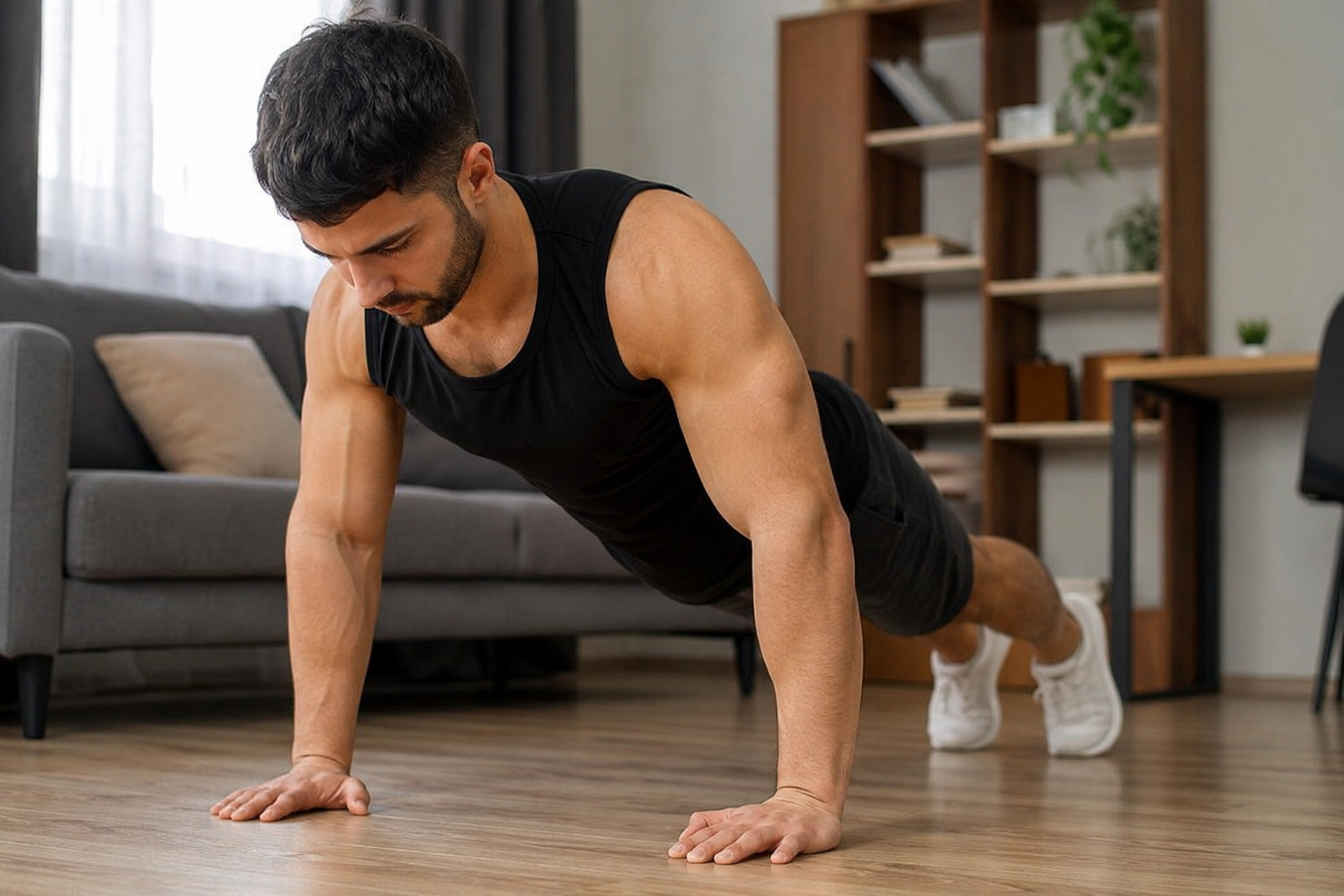
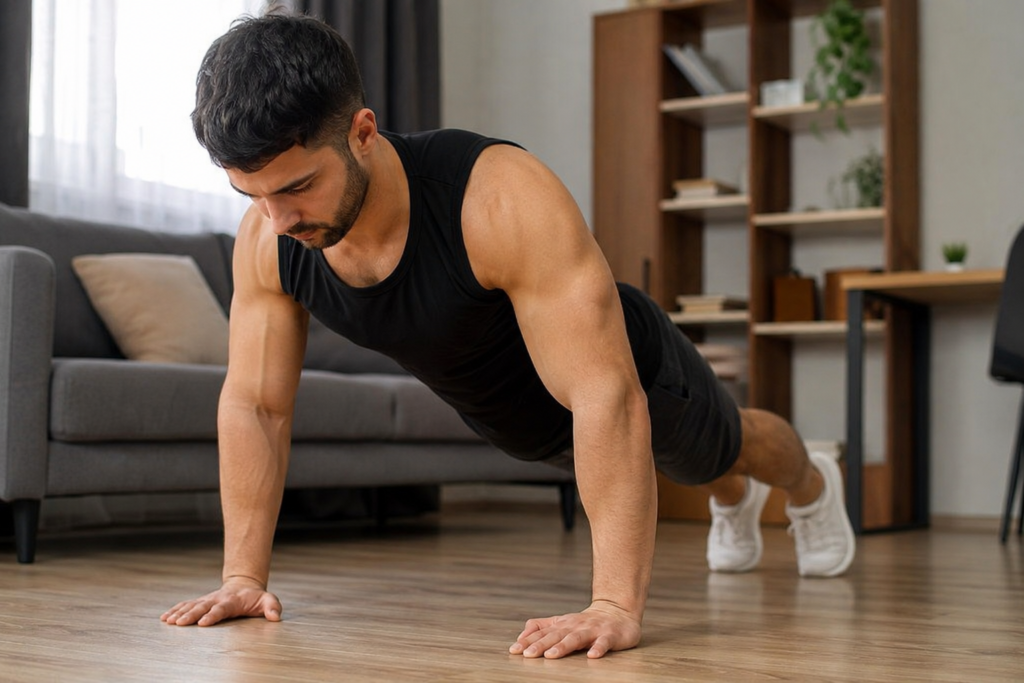
Push-Ups
Push-ups mainly train:
- Chest
- Shoulders
- Triceps
- Core
If regular push-ups become easy, try:
- Diamond Push-Ups
- Decline Push-Ups
- Archer Push-Ups
- Wide Push-Ups
Each variation increases difficulty.
Squats
Squats are one of the best lower-body exercises.
They strengthen:
- Quadriceps
- Hamstrings
- Glutes
- Core
Once bodyweight squats become easy, progress to:
- Jump Squats
- Bulgarian Split Squats
- Pistol Squats
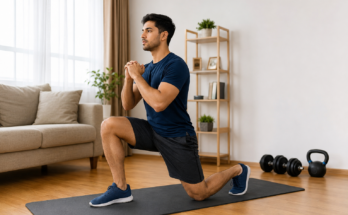
Lunges
Lunges improve:
- Balance
- Leg strength
- Stability
- Hip mobility
Perform walking lunges or reverse lunges for variety.
Pull-Ups
If you have access to a pull-up bar, never ignore pull-ups.
They develop:
- Back
- Biceps
- Forearms
- Grip strength
If you cannot do one yet, practice negative pull-ups until you build enough strength.
Dips
Using two sturdy chairs or parallel bars, dips work:
- Chest
- Triceps
- Front shoulders
They’re one of the best upper-body muscle builders.
Planks
Strong core muscles improve every exercise.
Try:
- Front plank
- Side plank
- Reverse plank
Hold each position for 30–60 seconds.
Progressive Overload Without Equipment
This is where most beginners make mistakes.
Doing 20 push-ups every day for months won’t build much muscle after a while because your body adapts.
Instead, increase the challenge by:
- Adding more repetitions
- Doing more sets
- Slowing down each movement
- Reducing rest time
- Trying harder exercise variations
- Wearing a backpack filled with books
This keeps your muscles growing.
Sample Home Workout Plan
Here’s a beginner-friendly full-body routine.
Monday
- Push-Ups – 4 × 12
- Squats – 4 × 20
- Plank – 3 × 45 seconds
Tuesday
- Walking Lunges – 4 × 15 each leg
- Dips – 3 × 12
- Mountain Climbers – 3 × 30 seconds
Wednesday
Rest or light walking.
Thursday
- Diamond Push-Ups – 4 × 10
- Bulgarian Split Squats – 3 × 12
- Plank – 3 × 60 seconds
Friday
- Pull-Ups – 4 sets
- Pike Push-Ups – 3 × 12
- Jump Squats – 3 × 15
Saturday
Repeat your favorite workout.
Sunday
Complete rest.
Nutrition Matters More Than You Think
Many people work out every day but never gain muscle because their diet isn’t supporting growth.
Training is only half the job.
Nutrition completes the process.
Eat Enough Protein
Protein repairs damaged muscle fibers.
Aim for around 1.6–2.2 grams of protein per kilogram of body weight each day if your goal is muscle growth.
Good protein sources include:
- Eggs
- Chicken
- Fish
- Beef
- Greek yogurt
- Milk
- Cottage cheese
- Lentils
- Chickpeas
- Beans
- Tofu
Spread your protein intake across your meals.
Don’t Fear Carbohydrates
Carbs provide energy for your workouts.
Healthy sources include:
- Rice
- Oats
- Potatoes
- Sweet potatoes
- Whole wheat bread
- Fruits
- Brown rice
Without enough carbs, your workouts may feel weak.
Healthy Fats Are Important
Healthy fats support hormone production, including testosterone.
Choose foods like:
- Nuts
- Seeds
- Peanut butter
- Olive oil
- Avocados
- Fish
Drink Plenty of Water
Muscles are made mostly of water.
Even mild dehydration can reduce performance and recovery.
Try drinking 2–3 liters daily, or more if you sweat heavily.
Sleep Is Muscle-Building Time
Many beginners underestimate sleep.
Your muscles don’t grow during workouts.
They grow while you recover.
Aim for:
- 7–9 hours of quality sleep every night
Poor sleep reduces muscle recovery and training performance.
Track Your Progress
Don’t guess.
Record everything.
Track:
- Body weight
- Photos every month
- Number of push-ups
- Pull-up count
- Workout consistency
Seeing progress keeps motivation high.
Common Mistakes That Stop Muscle Growth
Avoid these common errors.
Skipping Meals
Without enough calories, your body struggles to build new muscle.
Not Eating Enough Protein
Muscles need protein to repair and grow.
Doing the Same Workout Forever
Increase the challenge regularly.
Training Every Day
More isn’t always better.
Recovery is part of muscle building.
Poor Exercise Form
Correct technique prevents injuries and improves results.
Can You Build a Muscular Body Using Only Bodyweight?
Definitely.
Many calisthenics athletes have muscular physiques without using traditional gym equipment.
As your strength improves, you can progress to advanced movements like:
- Handstand Push-Ups
- Muscle-Ups
- One-Arm Push-Ups
- Front Lever
- Human Flag
These exercises demand tremendous strength and muscle control.
How Long Does It Take to Build Muscle Without Gym?
Results depend on:
- Diet
- Genetics
- Training intensity
- Sleep
- Consistency
Most beginners notice:
- Increased strength in 2–4 weeks
- Visible muscle definition in 6–8 weeks
- Significant muscle growth in 3–6 months
Stay patient and avoid comparing yourself to others.
Extra Tips for Faster Muscle Growth
Here are a few simple habits that can make a big difference:
- Warm up for 5–10 minutes before every workout.
- Focus on controlled movements instead of rushing through reps.
- Increase your workout difficulty gradually every week.
- Stay consistent even on busy days by doing a shorter workout.
- Eat whole, nutritious foods most of the time.
- Stretch after training to improve flexibility and reduce soreness.
- Stay positive and trust the process.
Small improvements every week lead to big changes over time.
Frequently Asked Questions
Can beginners build muscle without gym?
Yes. Beginners often gain muscle quickly with bodyweight exercises, proper nutrition, and consistent training.
Is home workout enough for muscle gain?
Yes. A well-planned home workout that includes progressive overload can build impressive muscle over time.
Do I need supplements?
No. Supplements are optional. Most people can meet their nutritional needs through a balanced diet rich in protein, carbohydrates, and healthy fats.
Can push-ups build muscle?
Absolutely. Push-ups effectively build the chest, shoulders, triceps, and core, especially when you increase the difficulty over time.
How many days should I work out?
For most beginners, 4–5 workout sessions per week with enough rest days is a great balance for muscle growth.
Final Thoughts
If you’ve been wondering how to build muscle without gym, the answer is simple: focus on consistent bodyweight training, eat enough protein, challenge your muscles regularly, and give your body time to recover. You don’t need expensive equipment or a fancy fitness center to make real progress.
Start with the basics, stay patient, and improve a little each week. Over time, those small efforts add up to noticeable strength, better muscle definition, and improved confidence. The best workout plan is the one you can stick with, so make home training a habit and let consistency do the rest.