Introduction
Home workouts have become a convenient way to stay active without needing a gym membership or expensive equipment. With a simple exercise routine and enough space, you can improve strength, flexibility, cardiovascular fitness, and overall physical health from home.
A good home workout does not have to be complicated. Bodyweight exercises such as squats, push-ups, lunges, planks, and jumping jacks can provide an effective foundation for beginners. As fitness improves, you can add resistance bands, dumbbells, or other equipment.
This home workout guide covers effective exercises, beginner routines, strength training, cardio, recovery, and practical fitness tips for creating a sustainable workout routine in 2026.
What Is a Home Workout?
A home workout is physical exercise performed at home instead of a gym or dedicated fitness facility.
Home workouts can include:
- Bodyweight exercises
- Strength training
- Cardio workouts
- Stretching
- Mobility exercises
- Yoga
- HIIT routines
- Resistance-band training
The best routine depends on your fitness level, goals, available space, and equipment.
Benefits of Home Workouts
Home workouts offer several advantages.
1. Convenience
You can exercise without traveling to a gym.
2. Flexible Schedule
You can fit workouts around work, school, family, or other responsibilities.
3. Lower Cost
Bodyweight workouts require little or no equipment.
4. Privacy
Some people feel more comfortable exercising at home.
5. Easy to Maintain
When exercise is convenient, it can be easier to make it part of your regular routine.
Best Home Exercises for Beginners
Beginners can start with simple movements that train major muscle groups.
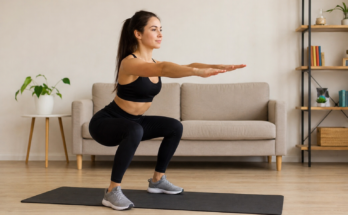
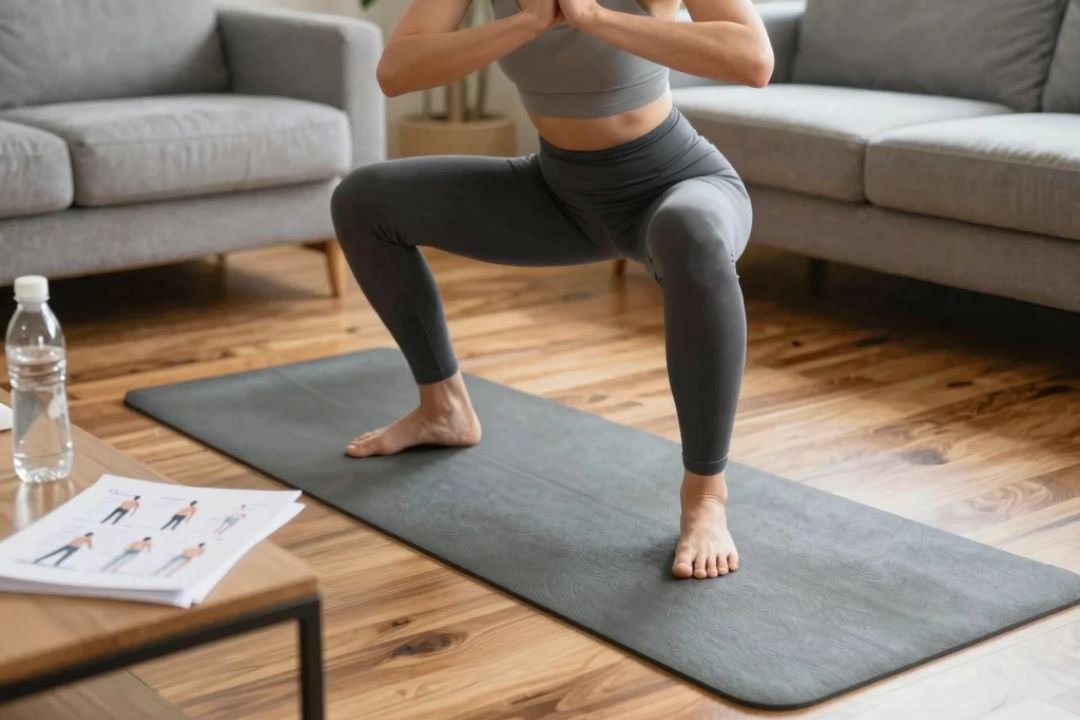
1. Bodyweight Squats
Squats target the legs and hips while also challenging the core.
How to perform:
- Stand with your feet approximately shoulder-width apart.
- Keep your chest comfortably upright.
- Bend your knees and hips as if sitting back into a chair.
- Lower yourself as far as comfortable while maintaining control.
- Push through your feet to return to the starting position.
Start with a manageable number of repetitions and focus on technique.
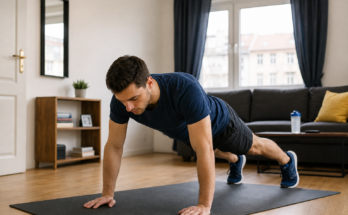
2. Push-Ups
Push-ups work the chest, shoulders, arms, and core.
Beginners can start with an easier variation, such as incline push-ups against a sturdy elevated surface.
Keep your body controlled throughout the movement.
3. Lunges
Lunges strengthen the legs and can improve balance.
To perform a basic lunge:
- Stand upright.
- Step one foot forward.
- Lower your body with control.
- Push through the front foot.
- Return to the starting position.
- Repeat on the opposite side.
Use a comfortable range of motion.
4. Glute Bridges
Glute bridges target the muscles around the hips and buttocks.
Lie on your back with your knees bent and feet on the floor. Lift your hips while keeping your movement controlled, then lower them back down.
5. Planks
Planks strengthen the core.
Start in a comfortable plank position and maintain a straight, controlled body position without holding your breath.
Beginners can start with short intervals.
6. Jumping Jacks
Jumping jacks can raise your heart rate and provide a simple cardio exercise.
If jumping is uncomfortable, use a low-impact step-out variation.
7. Mountain Climbers
Mountain climbers combine core stability with movement and can be adapted for different fitness levels.
Start slowly and prioritize control over speed.
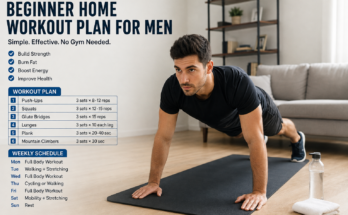
Beginner Home Workout Routine
A simple beginner routine can include:
| Exercise | Suggested Sets |
|---|---|
| Bodyweight Squats | 2–3 |
| Incline or Regular Push-Ups | 2–3 |
| Glute Bridges | 2–3 |
| Lunges | 2–3 |
| Plank | 2–3 |
| Jumping Jacks | 2–3 |
Choose a number of repetitions or duration that feels manageable.
Beginners should prioritize proper technique rather than trying to complete as many repetitions as possible.
Full-Body Home Workout
A full-body routine can combine exercises for the legs, upper body, and core.
Warm-Up
Spend several minutes gradually increasing movement and preparing your body.
Main Workout
Perform:
- Squats
- Push-ups
- Lunges
- Glute bridges
- Planks
- Mountain climbers
Rest when necessary and adjust the intensity to your fitness level.
Cool-Down
Finish with gentle movements and stretching.
Home Cardio Workout
Cardio can improve cardiovascular fitness and help increase daily energy expenditure.
Simple home cardio exercises include:
- Marching in place
- Jumping jacks
- Step-ups
- High knees
- Dancing
- Mountain climbers
- Low-impact cardio movements
A beginner can alternate periods of activity with recovery.
For example:
30 seconds of movement → 30 seconds of rest → repeat
Adjust the duration according to your fitness level.
Home Strength Training
Strength training does not always require a gym.
You can use:
- Bodyweight
- Resistance bands
- Dumbbells
- Kettlebells
- Household items designed and used safely for resistance
Strength workouts can focus on major movement patterns such as:
- Squatting
- Pushing
- Pulling
- Lunging
- Hip hinging
- Core stabilization
Gradually increasing resistance or difficulty can help you continue progressing.
Home Workout With Dumbbells
If you have dumbbells, you can expand your exercise options.
Useful movements include:
Dumbbell Squats
Hold the weights comfortably while performing a controlled squat.
Dumbbell Rows
Train the upper back by pulling the weight toward your body while maintaining a stable position.
Shoulder Presses
Press the weights overhead with controlled movement.
Romanian Deadlifts
Use a controlled hip-hinge movement to train the posterior chain.
Biceps Curls
Curl the weights toward your shoulders while controlling the movement.
Choose an appropriate weight that allows you to maintain good technique.
Home Workout Without Equipment
You can still achieve an effective workout without equipment.
A basic routine can include:
- Squats
- Push-ups
- Lunges
- Glute bridges
- Planks
- Mountain climbers
You can make bodyweight exercises more challenging by increasing repetitions, slowing the movement, adding pauses, or progressing to more difficult variations.
Home Workout for Weight Management
Exercise can support weight management when combined with an appropriate eating pattern.
A balanced routine can include both:
Cardio: Walking, cycling, dancing, or home cardio
Strength training: Squats, push-ups, lunges, and resistance exercises
Daily movement: Walking, household activities, and reducing prolonged sitting
There is no single workout that guarantees weight loss. Nutrition, activity, sleep, and individual factors all influence weight management.
Home Workout for Muscle Building
Muscle development requires appropriate resistance and progressive training.
You can make home workouts more challenging by:
- Increasing resistance
- Adding repetitions
- Increasing sets
- Using slower repetitions
- Adding resistance bands
- Using dumbbells
- Progressing to harder exercise variations
Adequate nutrition and recovery are also important.
20-Minute Home Workout
If you have limited time, a short routine can still provide useful physical activity.
Warm-Up — 3 Minutes
Use gentle movements such as:
- Marching
- Arm circles
- Light squats
Main Workout — 14 Minutes
Alternate exercises such as:
- Squats
- Push-ups
- Lunges
- Glute bridges
- Mountain climbers
- Planks
Cool-Down — 3 Minutes
Finish with gentle movement and comfortable stretches.
Modify the routine according to your fitness level.
Home Workout Schedule for Beginners
A simple weekly schedule could look like:
Monday: Full-body workout
Tuesday: Light walking or mobility
Wednesday: Full-body workout
Thursday: Rest or gentle movement
Friday: Full-body workout
Saturday: Walking, cycling, or another enjoyable activity
Sunday: Rest
Beginners do not need to exercise intensely every day.
Importance of Warm-Up
A warm-up prepares your body for physical activity.
A simple warm-up can include:
- Walking in place
- Arm circles
- Hip movements
- Gentle squats
- Light dynamic movements
Spend several minutes gradually increasing intensity before your main workout.
Importance of Recovery
Recovery is an important part of fitness.
Give your body time to recover between demanding workouts.
Helpful recovery habits include:
- Adequate sleep
- Balanced nutrition
- Hydration
- Rest days
- Appropriate workout intensity
More exercise is not always better if your body is not recovering properly.
Common Home Workout Mistakes
Exercising Without Warming Up
Starting intense exercise immediately may make the workout feel more difficult.
Using Poor Technique
Correct movement patterns are more important than completing large numbers of repetitions.
Doing Too Much Too Soon
Rapidly increasing workout intensity can make it harder to maintain a consistent routine.
Ignoring Rest
Recovery helps your body adapt to training.
Following Random Workouts
A structured routine can make it easier to track progress.
How to Stay Motivated
Motivation can change from day to day.
To build consistency:
- Set realistic goals.
- Track workouts.
- Exercise at a convenient time.
- Choose activities you enjoy.
- Start with short sessions.
- Celebrate improvements in strength and fitness.
- Avoid comparing your progress with others.
Consistency is more valuable than perfection.
Home Workout Safety Tips
Safety should always be a priority.
Before exercising:
- Make sure you have enough space.
- Keep the floor clear.
- Wear appropriate footwear when needed.
- Use equipment correctly.
- Start with an appropriate intensity.
- Stop if you experience significant pain, dizziness, or unusual symptoms.
If you have an existing health condition or injury, consider speaking with an appropriate healthcare professional before starting a new exercise program.
How to Progress Your Home Workout
Once a routine becomes easier, gradually increase the challenge.
You can:
- Add repetitions.
- Add another set.
- Increase resistance.
- Slow down repetitions.
- Reduce rest slightly.
- Use a more challenging variation.
- Increase workout duration.
Progress gradually rather than changing everything at once.
Conclusion
Home workouts are an effective and convenient way to stay active in 2026. You do not need an expensive gym membership or complicated equipment to build a useful fitness routine.
Exercises such as squats, push-ups, lunges, glute bridges, planks, and jumping jacks can create a strong foundation for beginners. As your fitness improves, resistance bands, dumbbells, or more advanced exercises can provide additional challenges.
The key to successful home fitness is consistency, proper technique, gradual progression, recovery, and realistic goals. Whether your goal is improving strength, increasing fitness, supporting weight management, or simply becoming more active, a well-planned home workout routine can help you move toward your goals.
Start with manageable sessions, listen to your body, and gradually build a routine that fits your lifestyle.