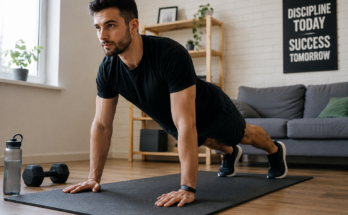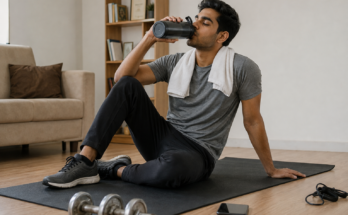
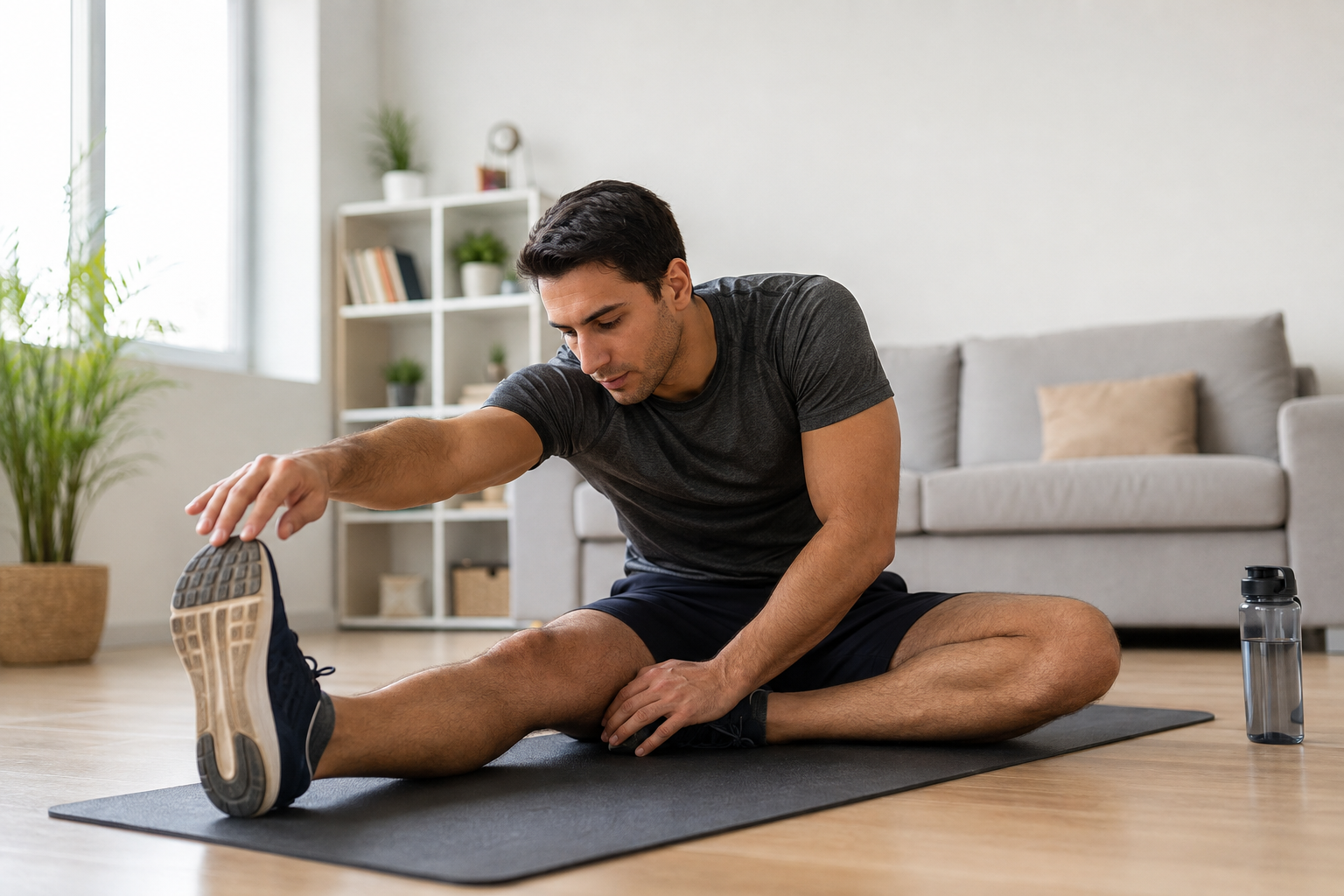
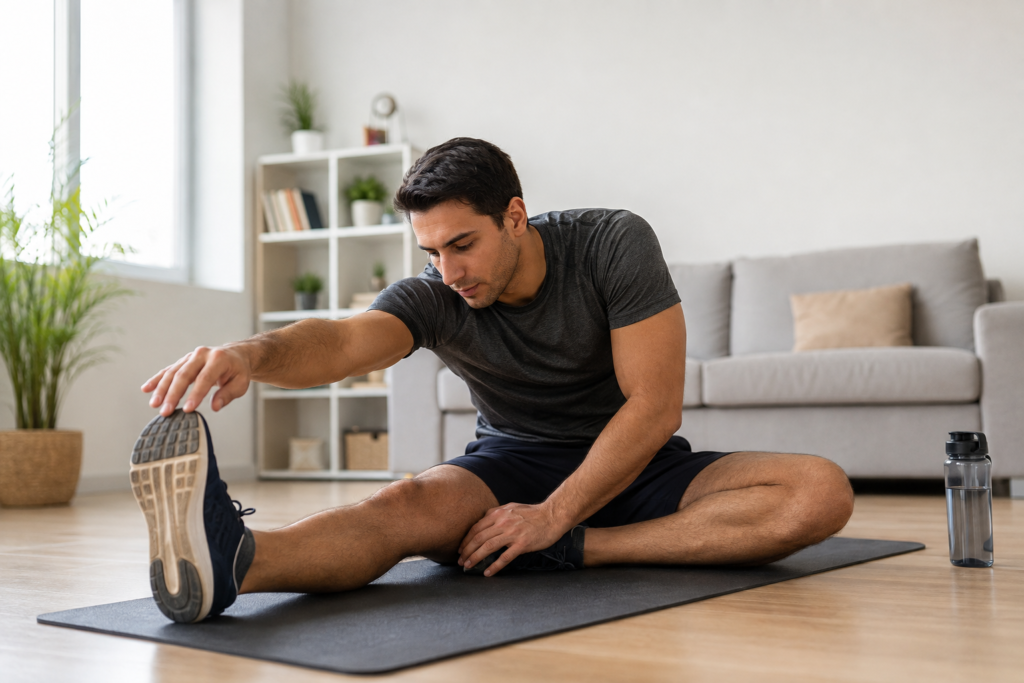
After finishing a workout, many people simply grab some water and move on with their day. While this seems normal, skipping post workout stretching can slow down recovery and leave your muscles feeling tight. Following the best stretching routine after workout at home is one of the easiest ways to improve flexibility, reduce muscle stiffness, and help your body recover naturally.
The good thing is that you do not need expensive equipment or a gym membership. A few minutes of stretching at home can make a big difference in how your body feels the next day. Whether you are a beginner or someone who exercises regularly, adding a stretching routine after every workout is a habit worth building.
In this guide, I will share the best stretching routine after workout at home that works for both men and women. These stretches are simple, effective, and easy to follow.
Why Stretching After a Workout Is Important
When you exercise, your muscles contract repeatedly. After the workout, they stay tight for a while. Stretching helps your muscles relax and return to their normal length.
Here are some of the biggest benefits of post workout stretching.
Improves flexibility
Reduces muscle tightness
Supports faster recovery
Helps improve posture
Increases blood circulation
Reduces the risk of future injuries
Makes your body feel relaxed after exercise
Even spending just ten minutes stretching can improve your overall fitness journey.
When Should You Stretch?
The best time to stretch is immediately after your workout when your muscles are still warm. Warm muscles are more flexible and respond better to stretching than cold muscles.
Try to finish your workout, drink a little water, and begin stretching within five minutes.
Hold every stretch for around 20 to 30 seconds while breathing slowly.
Never bounce during a stretch because it can increase the chance of injury.
Best Stretching Routine After Workout at Home
The following routine targets the entire body. It takes about ten to fifteen minutes and requires no equipment.
Standing Hamstring Stretch
Your hamstrings work hard during squats, running, jumping, and many home workouts.
Stand with one foot slightly in front of the other.
Keep both legs straight.
Slowly bend forward from your hips.
Reach toward your front foot without forcing the movement.
Hold for 30 seconds before switching legs.
This stretch helps reduce stiffness in the back of your legs and improves flexibility.
Standing Quad Stretch
The quadriceps are located at the front of your thighs. They become tight after lunges, squats, and cycling.
Stand on one leg.
Hold your opposite ankle behind you.
Pull your foot gently toward your hips.
Keep your knees close together.
Hold for 30 seconds on each side.
You should feel a comfortable stretch in the front of your thigh.
Calf Stretch
Your calves support almost every lower body movement.
Stand facing a wall.
Place your hands against the wall.
Step one foot back.
Keep your back heel flat on the floor.
Lean forward slowly.
Hold for 30 seconds before changing legs.
This stretch improves ankle mobility and helps prevent calf tightness.
Hip Flexor Stretch
Sitting for long hours and intense leg workouts often tighten the hip flexors.
Step into a lunge position.
Lower your back knee to the floor.
Push your hips forward gently.
Keep your upper body straight.
Hold for 30 seconds before changing sides.
This stretch is excellent for improving hip mobility and reducing lower back discomfort.
Seated Butterfly Stretch
The butterfly stretch targets your inner thighs and hips.
Sit on the floor.
Bring the soles of your feet together.
Allow your knees to fall outward.
Hold your feet with your hands.
Lean forward slightly.
Hold the stretch for 30 seconds.
This is one of the easiest stretches to include in your daily routine.
Child’s Pose
Child’s Pose is one of the most relaxing stretches for the whole body.
Kneel on the floor.
Sit back onto your heels.
Stretch your arms forward.
Rest your forehead on the ground.
Take slow deep breaths.
Stay in the position for 30 to 60 seconds.
It stretches your back, shoulders, hips, and spine while helping your body relax.
Cat Cow Stretch
This movement improves spinal flexibility and reduces stiffness.
Start on your hands and knees.
Arch your back upward while lowering your head.
Then slowly lower your stomach while lifting your head.
Repeat the movement slowly for about one minute.
Focus on smooth breathing throughout the exercise.
Cobra Stretch
The Cobra Stretch helps stretch the abdominal muscles while improving spinal mobility.
Lie face down.
Place your hands beneath your shoulders.
Slowly push your chest upward.
Keep your hips touching the floor.
Hold the position for 20 to 30 seconds.
Avoid pushing too high if you feel discomfort.
Shoulder Stretch
Many upper body workouts tighten the shoulders.
Bring one arm across your chest.
Use the opposite arm to gently pull it closer.
Keep your shoulders relaxed.
Hold for 30 seconds before switching sides.
This helps improve shoulder flexibility and reduces stiffness.
Triceps Stretch
Raise one arm overhead.
Bend your elbow so your hand reaches behind your neck.
Use your opposite hand to gently press your elbow.
Hold for 30 seconds.
Repeat on the other side.
It is perfect after push ups, shoulder exercises, or weight training.
Chest Stretch
Stand near a doorway.
Place your forearm against the frame.
Turn your body slightly away.
You will feel a stretch across your chest.
Hold for 30 seconds on each side.
This stretch is especially useful if you spend long hours sitting at a desk.
Neck Stretch
Finish your stretching routine by relaxing your neck.
Sit or stand comfortably.
Tilt your head toward one shoulder.
Hold gently without pulling hard.
Repeat on both sides.
This helps release tension after upper body workouts.
How Long Should Your Stretching Routine Be?
The best stretching routine after workout at home does not need to be long.
A ten to fifteen minute session is enough for most people.
If you have completed an intense workout, you can stretch for twenty minutes while focusing on the muscles you trained the most.
Consistency matters more than duration.
Common Stretching Mistakes
Many people stretch incorrectly without realizing it.
Avoid these common mistakes.
Holding your breath
Stretching too aggressively
Bouncing while stretching
Skipping tight muscles
Rushing through each movement
Stretching cold muscles before warming up
Gentle stretching is always more effective than forcing your body into uncomfortable positions.
Tips for Better Flexibility
Improving flexibility takes time.
Follow these simple habits.
Stretch after every workout.
Drink enough water.
Stay consistent throughout the week.
Sleep well to help muscles recover.
Focus on slow breathing during stretches.
Never compare your flexibility with others.
Small improvements every week add up over time.
Can Beginners Follow This Routine?
Absolutely.
This stretching routine is beginner friendly and suitable for both men and women.
If you are new to exercise, move slowly and never force a stretch beyond your comfort level.
As your flexibility improves, your range of motion will naturally increase.
Frequently Asked Questions
How long should I hold each stretch?
Aim for 20 to 30 seconds. If a muscle feels especially tight, you can hold it for up to one minute without pain.
Should I stretch every day?
Yes. Daily stretching helps improve flexibility, posture, and overall mobility.
Is stretching after a workout better than before?
Both are useful, but after a workout your muscles are warm, making it the ideal time to improve flexibility.
Can stretching reduce muscle soreness?
Stretching may help reduce tightness and improve circulation, which can make your muscles feel better during recovery.
Do I need equipment for this routine?
No. Every exercise in this guide can be done at home without any equipment.
Final Thoughts
Following the best stretching routine after workout at home is one of the simplest ways to improve flexibility and support muscle recovery. You do not need special equipment or a large space. Just ten to fifteen minutes after each workout can help reduce tightness, improve mobility, and make your body feel refreshed.
The key is consistency. Stretch after every workout, move slowly, and focus on proper breathing. Over time, you will notice better flexibility, smoother movement, and less muscle stiffness. Make stretching a regular part of your fitness routine, and your body will thank you for it.